Latest
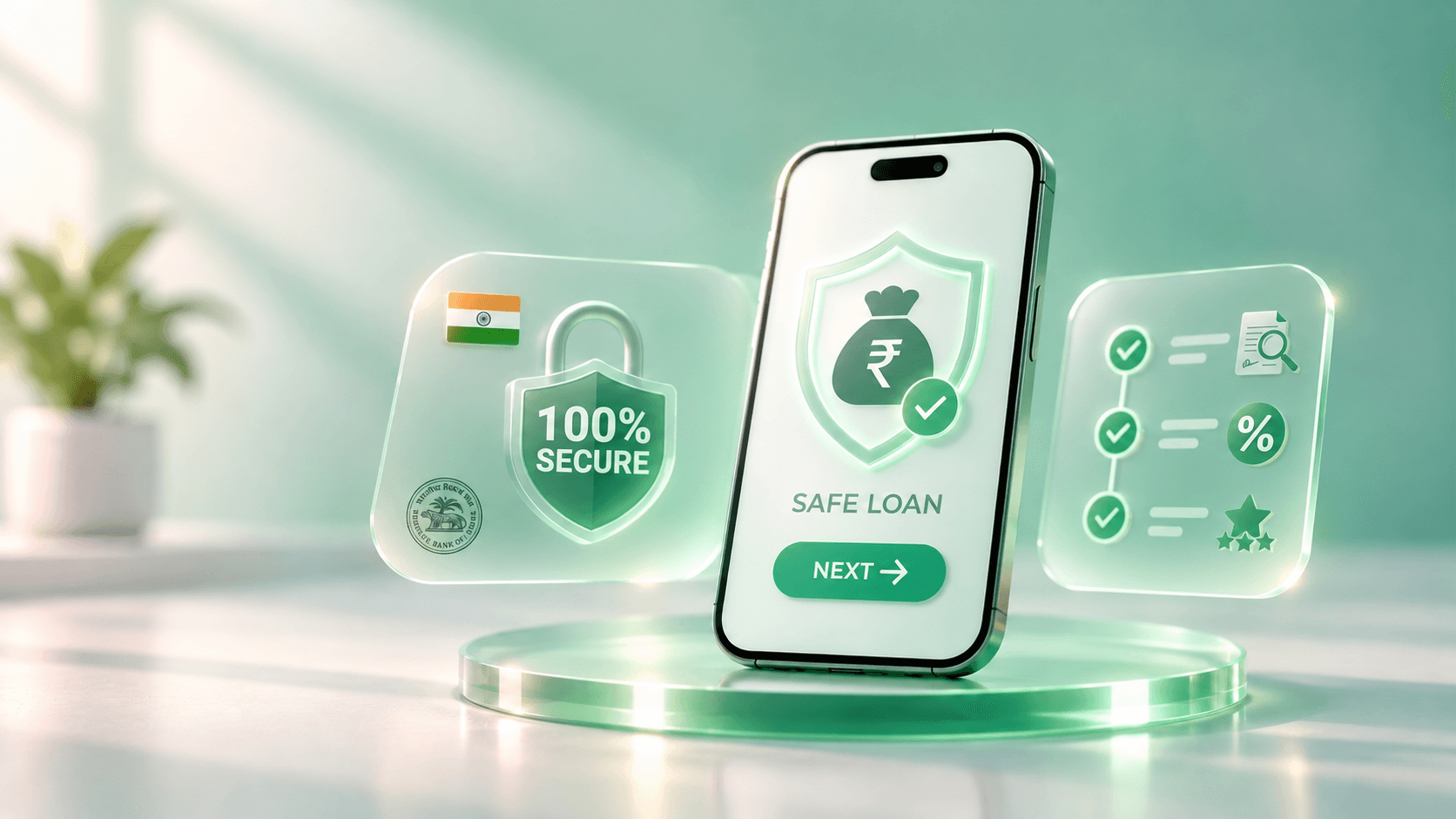
Consider this hypothetical example:Choosing a safe loan app in India starts with verifying the actual lender, reviewing borrowing costs, understanding how personal information is handled, and checking the platform's regulatory disclosures. A trustworthy application should provide clear loan terms, accessible customer support, and transparent repayment information before you accept an offer. Under the RBI's Digital Lending Directions, 2025, regulated lenders must follow specific borrower-protection requirements, including disclosure of a Key Facts Statement (KFS). Knowing these requirements helps you make a more informed borrowing decision without compromising your financial security.
What Makes a Safe Loan App in India?

A safe loan app in India is a digital platform that facilitates borrowing through an RBI-regulated bank or Non-Banking Financial Company (NBFC), while following applicable lending and data protection requirements.
Safety involves more than having a professional-looking website or attractive interest rates. Borrowers should be able to identify the lender, understand the charges, review loan documents, and access assistance when needed.
Important characteristics include:
. Verified lending partners: Loans originate from identifiable, regulated financial institutions.
. Transparent pricing: Interest rates, processing fees, APR, and repayment obligations are disclosed.
. Responsible data handling: Personal information is collected only for legitimate purposes.
. Accessible support: Borrowers can contact customer service and grievance officers.
. Clear documentation: Loan agreements and repayment schedules are available before commitment.
These qualities help borrowers distinguish between convenience and financial reliability.
Why Choosing a Safe Loan App in India Matters
Borrowing involves sharing sensitive information, including identity documents, income details, and banking information.
Selecting a safe loan app in India reduces the risk of dealing with misleading loan terms, unauthorised data collection, or questionable repayment practices.
The importance of borrower protection is reflected in India's regulatory framework.
In May 2025, the Reserve Bank of India introduced consolidated Digital Lending Directions covering customer protection, data collection, loan disclosures, and grievance redressal.
These rules established clearer responsibilities for regulated lenders and their lending service providers.
Therefore, evaluating a platform's transparency is just as important as comparing its interest rates.
How to Verify a Safe Loan App in India
Before using a lending platform, borrowers should independently verify its connection with a legitimate financial institution.
1. Identify the Actual Lending Institution
A safe loan app in India should clearly disclose the bank or NBFC responsible for sanctioning the loan.
Some platforms operate as Lending Service Providers (LSPs), connecting borrowers with regulated lenders rather than lending directly.
This distinction matters because the regulated financial institution remains responsible for the lending arrangement.
2. Check the RBI Digital Lending App Directory
The RBI's Digital Lending App directory became operational on July 1, 2025.
Borrowers can use this directory to check whether a particular application has been reported as associated with an RBI-regulated entity.
However, inclusion in the directory does not constitute RBI approval, endorsement, or a guarantee of safety.
3. Review the Lender's Official Website
A trustworthy financial institution should disclose its digital lending partners and related services on its official website.
Cross-checking this information adds another layer of verification.
4. Examine Loan Documentation
Before accepting an offer, review the KFS, interest rate, annual percentage rate, repayment schedule, and applicable fees.
A safe loan app in India should make these details available in an understandable format.
What Security Features Should a Loan App Have?
Digital security is essential because financial applications process confidential personal information.
When evaluating a safe loan app in India, consider the following security practices.
Secure Login and Authentication
Look for appropriate authentication measures, such as OTP verification, secure login sessions, and controls protecting account access.
Never share passwords, PINs, or OTPs with someone claiming to represent the lender.
Transparent Data Permissions
Under the RBI's digital lending framework, data collection must be need-based and supported by appropriate borrower consent.
Digital lending applications are restricted from accessing mobile phone resources such as contact lists, call logs, and media files, subject to specific permitted exceptions.
Review requested permissions before sharing information.
Clear Privacy Policies
A reliable platform should explain what information it collects, why it collects it, and how borrowers can exercise applicable data rights.
The presence of a privacy policy alone does not guarantee security, but the absence of meaningful disclosures is a concern.
How to Compare Loan Charges Before Borrowing
A safe loan app in India should allow borrowers to understand the actual cost of a loan before accepting it.
Interest rates are important, but additional charges can significantly affect repayment obligations.
Consider this hypothetical example:
| Loan Detail | Example |
|---|---|
| Principal Amount | ₹20,000 |
| Interest Rate | 18% annually |
| Repayment Tenure | 12 months |
| Processing Fee | ₹400 |
| GST on Processing Fee | ₹72 |
| Approximate Monthly EMI | ₹1,834 |
| Approximate Total Outflow | ₹22,480 |
Illustrative calculation using a reducing-balance EMI model. The total includes the stated processing fee and GST; actual APR and terms may differ.
This example demonstrates why borrowers should examine the entire repayment structure rather than focusing exclusively on the advertised interest rate.
A lower EMI may also result from a longer repayment tenure, potentially increasing the total interest payable.
Always compare the APR and KFS before making a decision.
Why RBI Guidelines Matter for Digital Borrowers
The RBI's Digital Lending Directions, 2025, introduced and consolidated requirements intended to improve transparency and customer protection.
These requirements are important when evaluating a safe loan app in India.
Key Facts Statement
Regulated lenders must provide a KFS containing essential loan information, including the APR and applicable charges.
Direct Fund Transfers
Digital loan disbursements generally must go directly into the borrower's bank account, subject to specified exceptions.
Repayments must ordinarily flow directly to the regulated lender rather than through a third-party intermediary's account.
Cooling-Off Period
Digital borrowers must receive a cooling-off period of at least one day, during which they can exit the loan by paying the principal and proportionate APR without penalty.
A reasonable processing fee may apply if disclosed upfront.
Complaint Resolution
Regulated lenders and borrower-facing lending service providers must appoint grievance redressal officers.
Borrowers should have access to these details through the relevant digital channels.
These safeguards make regulatory compliance an important consideration when choosing a lending platform.
How Bridge Capital Supports Transparent Borrowing

For borrowers researching a safe loan app in India, understanding how a platform operates is essential.
Bridge Capital provides a digital borrowing experience designed around accessible loan information and a straightforward application journey.
Bridge is operated by Zavo Nexus Private Limited as a Lending Service Provider. It is not a direct lender. Loan sanctioning, credit decisions, and disbursement are handled by its RBI-regulated lending partner.
Bridge offers personal loan amounts ranging from ₹3,000 to ₹25,000, subject to eligibility and applicable lending criteria.
Its platform allows eligible borrowers to complete verification digitally and review relevant loan details, including interest, fees, and repayment obligations.
Bridge also provides customer-support and grievance-related information through its website.
Before accepting any offer, borrowers should verify the lending partner and carefully examine the applicable KFS and agreement.
What Should You Check Before Accepting a Loan?
Even after selecting a safe loan app in India, responsible borrowing requires financial planning.
Before proceeding, consider these questions:
1. Can I afford the repayment? Evaluate your monthly income, existing EMIs, and essential expenses.
2. Do I understand the total cost? Review interest, processing fees, applicable taxes, and other charges.
3. Is the repayment schedule practical? Choose an obligation that aligns with your income cycle.
4. Have I verified the lender? Confirm the legal identity of the institution providing the funds.
5. Do I have the necessary documents? Keep copies of the KFS, agreement, and repayment schedule.
Taking time to review these details can help prevent financial strain.
Is a Safe Loan App in India Better Than Borrowing Without Verification?
A verified lending arrangement provides greater transparency and more clearly established avenues for customer protection.
A safe loan app in India should disclose the lending institution, explain the applicable charges, and provide an accessible grievance mechanism.
However, no application can guarantee that borrowing will be suitable for every individual.
Borrowers should independently assess repayment affordability, verify lender information, and avoid unnecessary debt.
Choosing a regulated lending arrangement is an important first step, but informed financial decisions remain equally essential.
Conclusion
Finding a safe loan app in India requires more than comparing approval speed or advertised interest rates.
Lender verification, transparent documentation, responsible data practices, and accessible customer support are essential considerations.
The RBI's digital lending framework offers important protections, but borrowers should still review every financial commitment carefully.
Bridge Capital provides eligible borrowers with a digital platform for accessing loans through its regulated lending partner.
Explore Bridge Capital to understand its borrowing process, eligibility requirements, and available loan information before deciding whether an offer suits your needs.
Frequently Asked Questions
Q1. What is a safe loan app in India?
A safe loan app in India facilitates borrowing through a verifiable regulated lender, discloses relevant charges, follows applicable data-handling requirements, and provides accessible customer support. Borrowers should independently check the lending institution and review all documents before accepting an offer.
Q2. How can I verify whether a lending app is trustworthy?
Check the RBI Digital Lending App directory, confirm the associated lender on its official website, review the KFS, and verify the platform's contact and grievance information. Directory inclusion alone does not guarantee safety.
Q3. Is every loan app listed on Google Play safe?
No. Availability on an app store does not establish regulatory compliance or financial reliability. Borrowers should independently verify the lender and review the application's permissions and documentation.
Q4. Can a lending platform operate without being an NBFC?
Yes. Lending Service Providers can facilitate digital borrowing on behalf of regulated banks or NBFCs. They do not necessarily sanction or disburse loans themselves.
Q5. Why is the Key Facts Statement important?
The KFS helps borrowers understand important financial terms, including APR, applicable fees, and repayment obligations. It supports meaningful comparisons and informed decisions before accepting a loan.
Q6. Does choosing a safe lending platform guarantee approval?
No. Loan approval depends on the regulated lender's assessment of eligibility, income, creditworthiness, and other applicable lending criteria.